
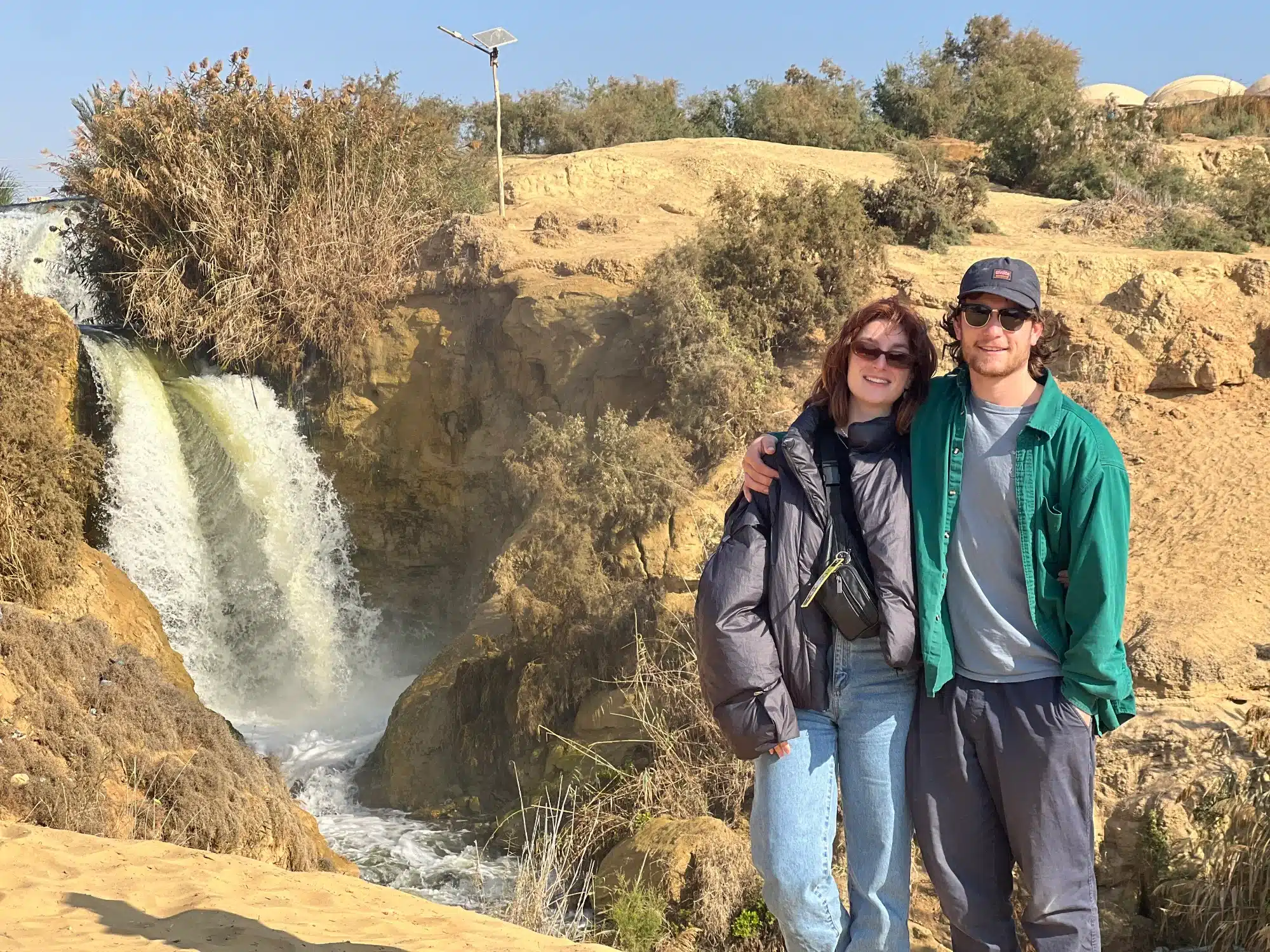
Fayoum Oasis, Egypt: Waterfalls, Whale Valley and Magic Lake Guide (2026)
Waterfalls in the desert, 40-million-year-old whale fossils and a lake that changes colour, less than two hours from Cairo. A local guide to Fayoum.
Fayoum Oasis is Egypt’s best-kept secret just outside Cairo. In less than two hours you leave the traffic behind and find waterfalls in the desert, lakes that change colour, a valley full of 40-million-year-old whale fossils, potters’ villages and some of the oldest pyramids in Egypt. Yet most visitors to Egypt never hear about it.
The Stars Camp team runs private trips to Fayoum every month, as a day trip from Cairo, as an overnight escape and as the first stop on longer Western Desert journeys to Bahariya, the White Desert and Siwa. In this guide we share everything we know: what to see, how to plan your day, the best time to go, prices, and the small local tips that make the difference. If you want to plan the full Western Desert road after Fayoum, Egypt Desert Trips has detailed guides to every oasis on the way.
Fayoum in 30 seconds
- Where: about 100 km southwest of Cairo, roughly 1.5 to 2 hours by car.
- Highlights: Wadi El Rayan waterfalls, Magic Lake, Wadi Al-Hitan (Whale Valley, a UNESCO World Heritage Site), Lake Qarun and Tunis Village.
- Time needed: one long day for the natural highlights, two days to add Tunis Village, Lake Qarun and the ancient sites.
- Best time: October to April. Summer days are hot in the desert areas.
- Good for: families, nature lovers, photographers and anyone who wants a break from Cairo.
Only one free day in Cairo? Fayoum might be the perfect answer.
Ask us whether a Fayoum day trip fits your schedule. We will tell you honestly what you can see in one day and what time we would leave Cairo to catch the best light at the lakes.
What is Fayoum and why is it special?
Fayoum is a large natural depression in the Western Desert, connected to the Nile by an ancient canal known as the Bahr Yusuf. Thanks to this water, the centre of Fayoum is green and fertile, full of fields, palm trees and villages, while the edges of the depression are pure desert. This mix of water and sand is what makes Fayoum so unusual: in the same day you can swim near a waterfall, walk on dunes and stand next to the skeleton of a prehistoric whale.
Fayoum also has a very long human history. Pharaohs of the Middle Kingdom developed the region with huge irrigation projects, the Greeks and Romans built towns here, and the famous Fayoum mummy portraits, realistic painted faces from the Roman period, were found in its cemeteries. Today Fayoum is home to farmers, fishermen and a lively community of artists and potters.
Wadi El Rayan: waterfalls in the desert
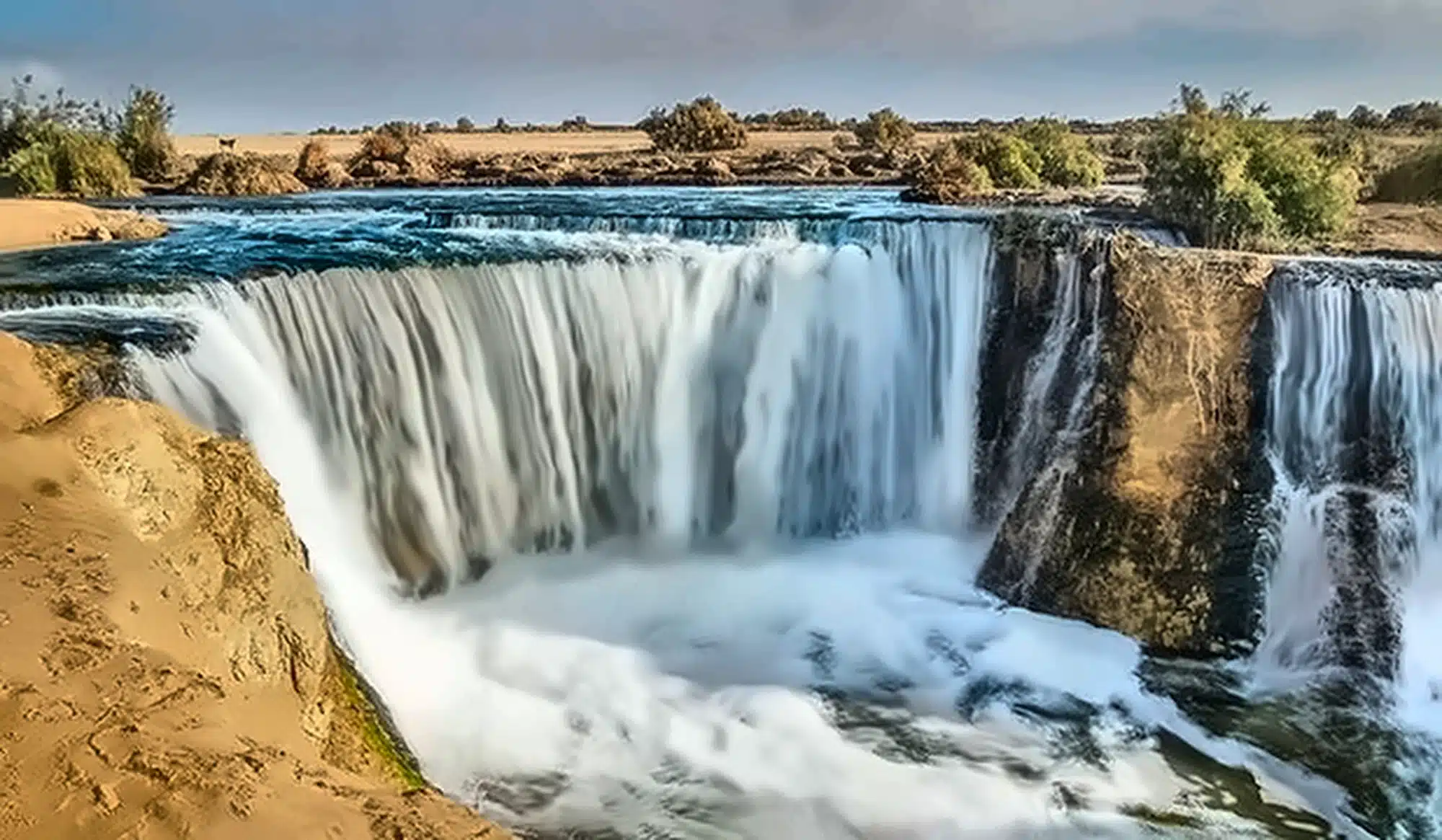
Wadi El Rayan is a protected area in the southwest of Fayoum, established in 1989. It contains two large lakes, the Upper Lake and the Lower Lake, linked by a channel that forms the only waterfalls in Egypt. The lakes were created in the 1970s when surplus agricultural drainage water from Fayoum was directed into the empty desert depression. Over time they became a rich habitat for birds and fish, and a favourite place for families from Cairo.
The waterfalls are not as tall as those in mountain countries, but seeing white water rushing between golden desert hills is truly surprising. You can walk along the rocks, have tea at the small cafes, and in warm months paddle in the water. Around the lakes there are dunes for sandboarding and viewpoints over the blue water. For more practical tips on desert travel from a local guide, see Egypt Safari Travel.
Magic Lake: the lake that changes colour
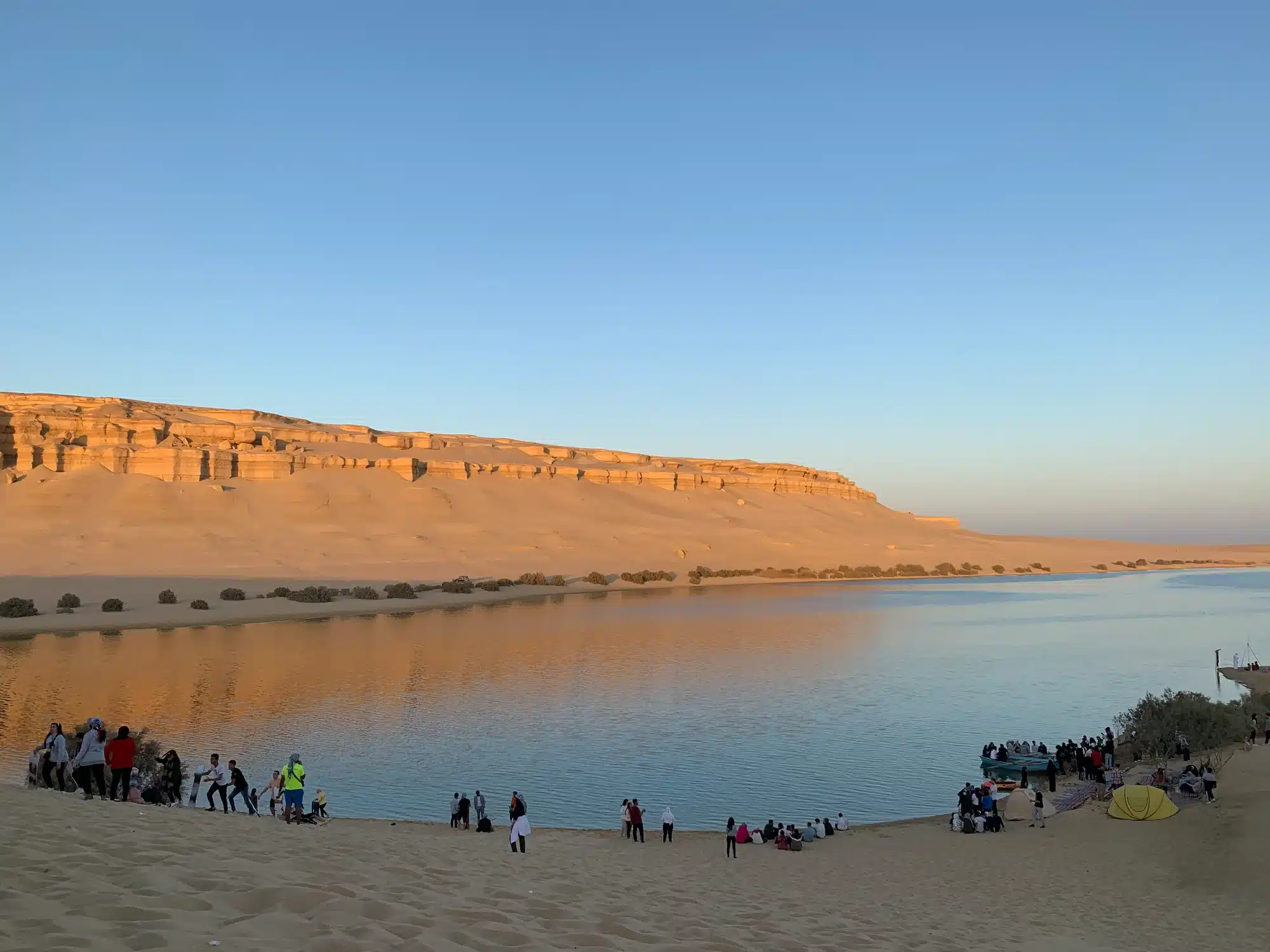
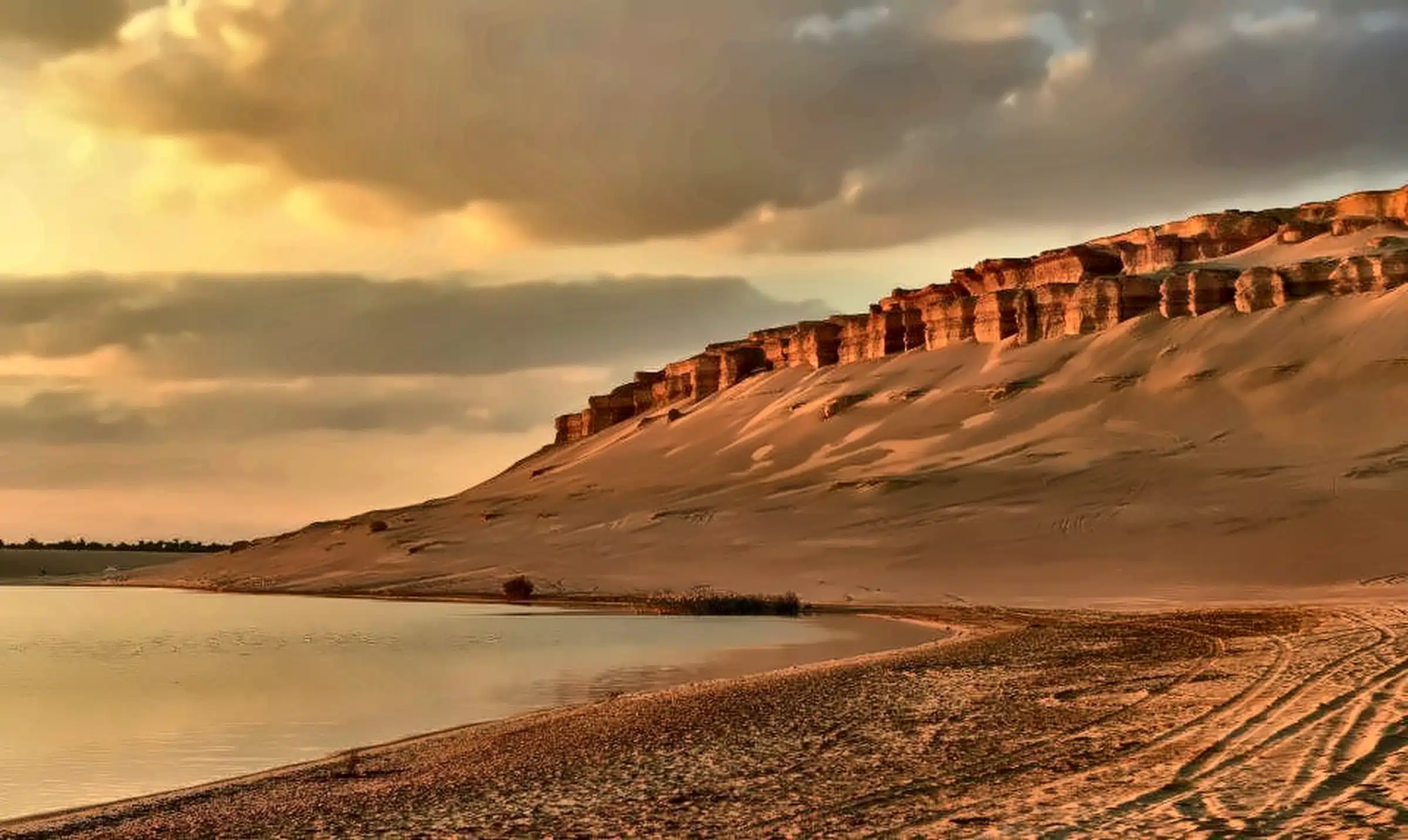
A short drive from the waterfalls, Magic Lake (Lake of Magic) lies in a bowl surrounded by golden dunes and ochre hills. Its name comes from the way the water changes colour during the day, from deep blue to green to silver, depending on the sunlight, the minerals and the wind. Climbing the dune above the lake for sunset is one of the best moments of any Fayoum trip, and it is also a great place for sandboarding.
Wadi Al-Hitan: the Valley of the Whales
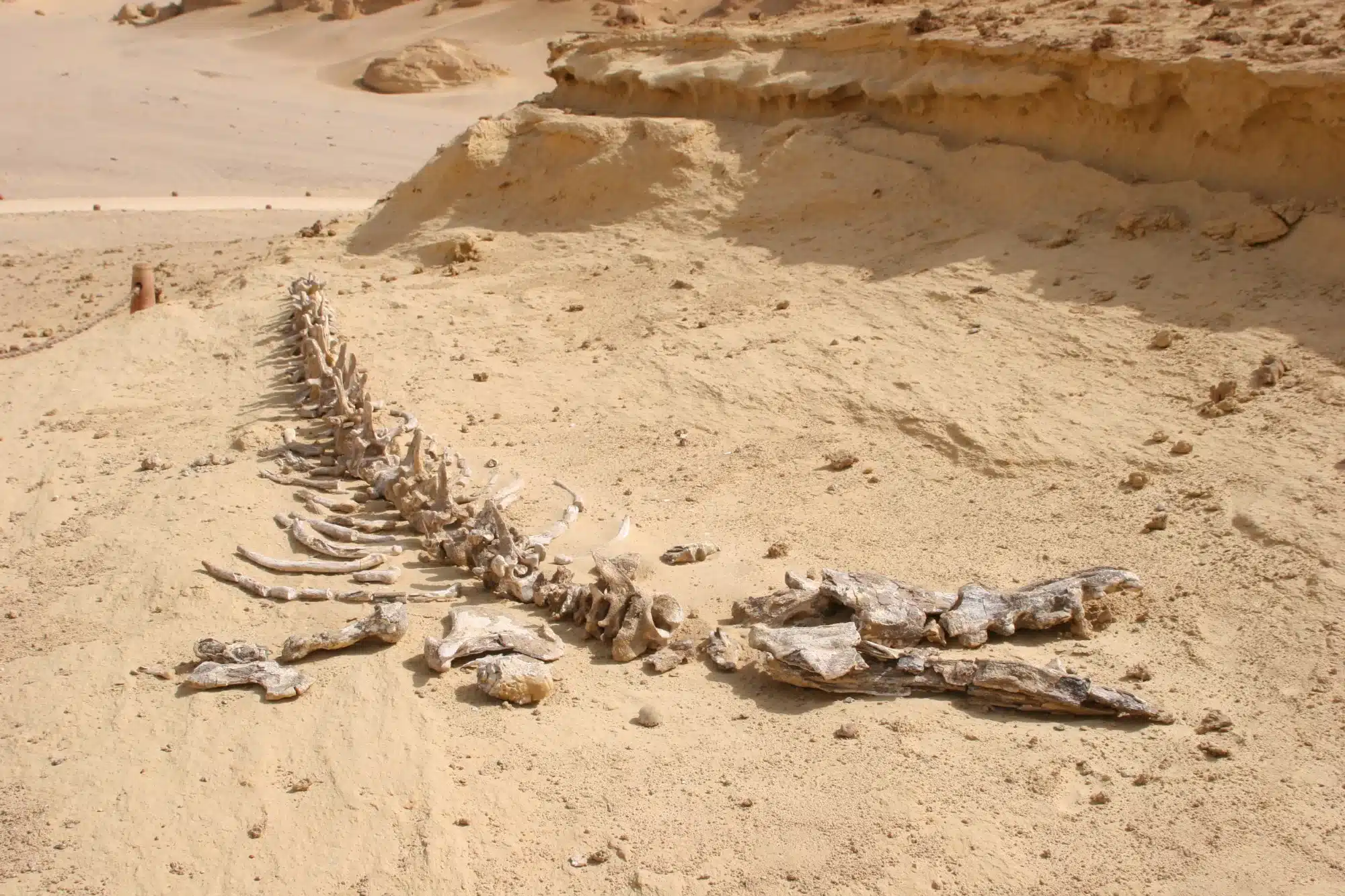
Wadi Al-Hitan, the Valley of the Whales, is one of the most important fossil sites on Earth, and it was declared a UNESCO World Heritage Site in 2005. About 40 million years ago this desert was the bottom of an ancient ocean called the Tethys Sea. The fossils found here belong to early whales, such as Basilosaurus and Dorudon, from a time when whales still had small hind legs. They show one of the great stories of evolution: how land mammals became ocean giants.
An easy open-air trail of a few kilometres leads past full skeletons lying in the sand, fossilised mangrove roots, shark teeth and wind-sculpted rock formations. At the entrance, the Fossils and Climate Change Museum, opened in 2016, displays a complete whale skeleton more than 18 metres long and explains the geology of the area.
Wadi Al-Hitan is also one of the darkest places near Cairo, so it is a wonderful place to camp and watch the stars.
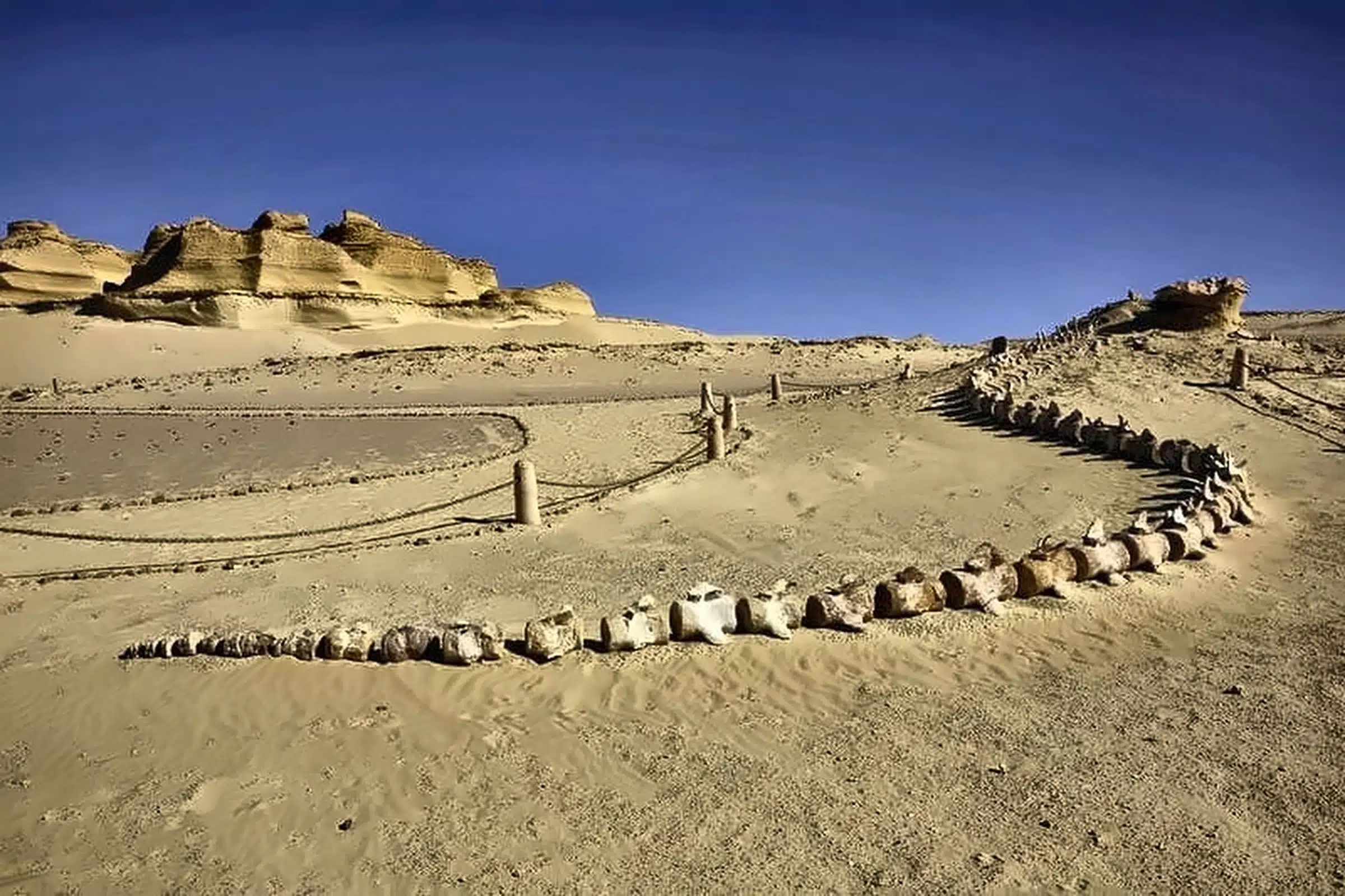
Have you ever slept next to a 40-million-year-old whale?
Very few travellers know you can camp near Whale Valley under a sky full of stars. Message us and we will tell you how a night there works, what we cook and when the stars are brightest.
Lake Qarun and Tunis Village
Lake Qarun
Lake Qarun, in the north of Fayoum, is one of the oldest lakes in Egypt. It is the remnant of the ancient Lake Moeris, which was much larger in pharaonic times. Today it is a salt lake that lies below sea level, surrounded by fishing villages and reed beds. In winter it attracts many migrating birds, including flamingos, ducks and herons, which makes it a good place for birdwatching.
Tunis Village
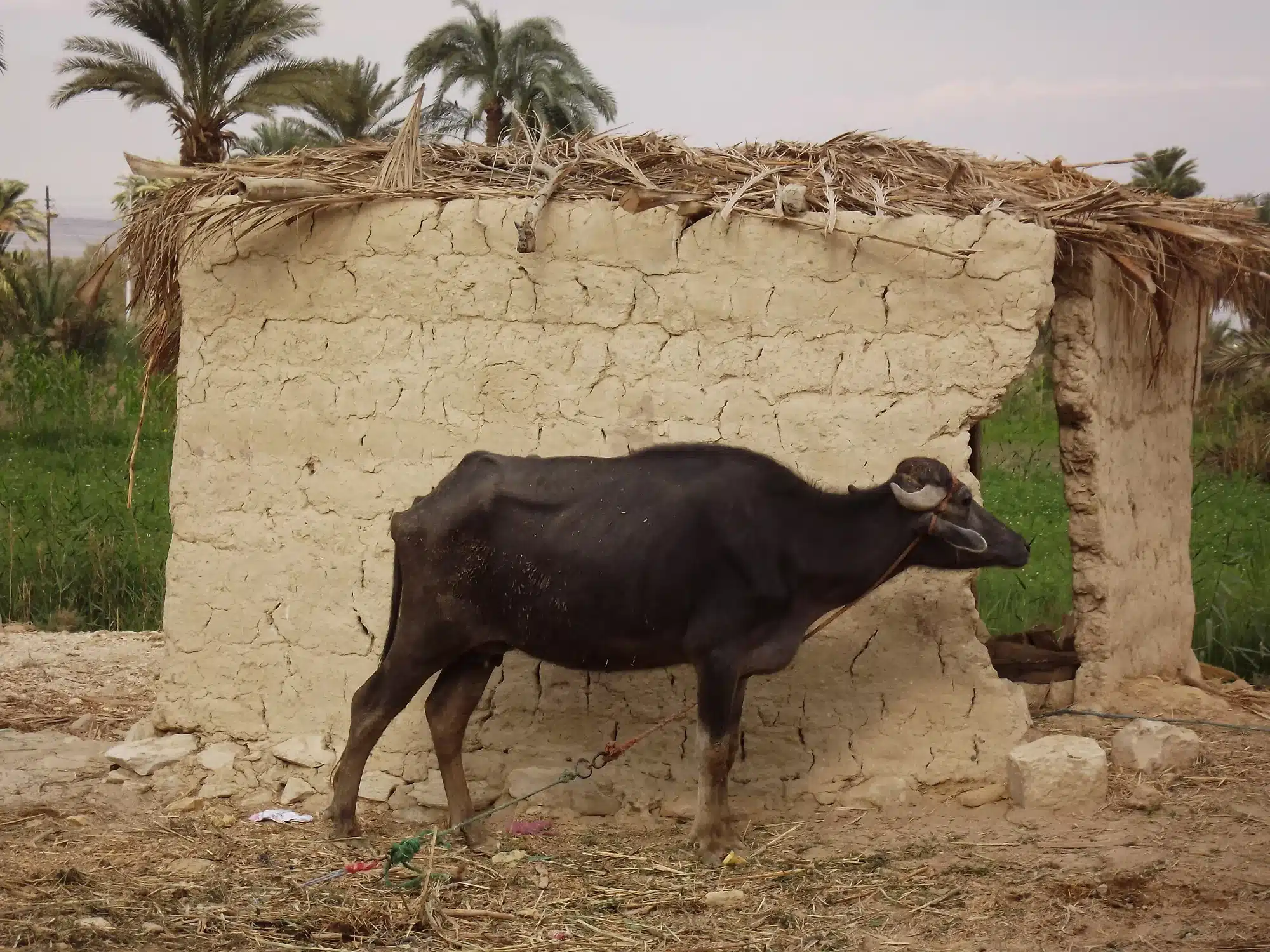
On the hills above Lake Qarun lies Tunis Village, famous for its pottery. In the 1960s Swiss potter Evelyne Porret settled here and started teaching local children ceramics. Her pottery school grew into a whole village of workshops, and today Tunis is known across Egypt for its colourful, hand-painted pottery. Visitors can watch the potters at work, try the wheel themselves and stay in charming mud-brick guesthouses with views over the lake.
Ancient Fayoum: pyramids, temples and Roman towns
History lovers will find plenty in Fayoum. These are the sites we recommend most.
- Pyramid of Meidum: on the edge of the Fayoum region, a striking early pyramid from the beginning of the Old Kingdom, often linked to King Sneferu.
- Pyramids of Hawara and Lahun: mud-brick pyramids of the Middle Kingdom kings who developed Fayoum.
- Medinet Madi: a Middle Kingdom temple with a processional avenue of lions and sphinxes, in a quiet desert setting.
- Qasr Qarun: a well-preserved Ptolemaic temple near the ancient town of Dionysias.
- Karanis (Kom Aushim): the ruins of a large Greco-Roman farming town with a small museum.
- The water wheels of Fayoum city: traditional wooden wheels that have lifted water for irrigation for centuries.
A short history of Fayoum: from Lake Moeris to the Fayoum portraits
Fayoum has been shaped by water for thousands of years. In prehistoric times a large lake filled much of the depression, and some of the earliest farming communities in Egypt lived on its shores. During the Middle Kingdom, around 4,000 years ago, pharaohs such as Senusret II and Amenemhat III invested heavily in the region. They improved the canal from the Nile and reclaimed land from the lake, turning Fayoum into one of the richest agricultural areas of Egypt. Greek writers later called the lake Lake Moeris and described it as one of the wonders of Egypt.
After Alexander the Great, the Ptolemaic kings settled Greek veterans in Fayoum and founded new towns, many of which are now archaeological sites such as Karanis and Dionysias. In the Roman period, wealthy families were buried with painted wooden portraits placed over the faces of their mummies. These Fayoum mummy portraits are among the most lifelike paintings to survive from the ancient world, and you can see examples in the Egyptian Museum in Cairo and in museums around the world.
Wildlife and birdwatching in Fayoum
Because it combines lakes, farmland and desert, Fayoum is one of the best places near Cairo to see wildlife. In winter, Lake Qarun and the Wadi El Rayan lakes attract thousands of migrating water birds, including flamingos, grebes, ducks, herons and egrets. The reed beds are home to kingfishers and warblers, and birds of prey hunt over the desert edges.
In the protected desert areas you may see the tracks of the fennec fox, the Rüppell’s fox and desert gazelles, especially around Wadi El Rayan and Wadi Al-Hitan in the early morning. Our guides know the quiet corners where animals are more likely to appear. If you are a keen birdwatcher, tell us before your trip and we will plan a slower route with more time at the lakes at sunrise.
Where to stay in Fayoum
Fayoum has a growing choice of places to stay, most of them small and full of character. In Tunis Village you will find eco-lodges and guesthouses built from mud brick and local stone, with gardens and terraces facing Lake Qarun. Around the lake there are a few larger hotels with pools. For a more adventurous night, camping near Wadi Al-Hitan or by the dunes of Magic Lake is unforgettable: no lights, total silence and a sky full of stars. On our overnight Fayoum trip we choose the option that fits your group, from a comfortable lodge to a full desert camp with dinner cooked on the fire.
Fayoum attractions compared
| Attraction | Type | Time needed | Best for |
|---|---|---|---|
| Wadi El Rayan waterfalls | Nature | 1 to 1.5 hours | Families, photos |
| Magic Lake | Nature | 1 hour | Sunset, sandboarding |
| Wadi Al-Hitan | UNESCO fossil site | 2 to 3 hours | Science, walking, stars |
| Lake Qarun | Lake | 1 hour | Birdwatching, relaxing |
| Tunis Village | Culture | 1.5 to 2 hours | Pottery, shopping |
| Medinet Madi | Ancient temple | 1 hour | History lovers |
| Meidum Pyramid | Pyramid | 1 hour | History lovers |
Day trip or overnight? Sample itineraries
Fayoum in one day
- 7:00: pickup in Cairo or Giza.
- 9:00: Wadi El Rayan lakes and waterfalls.
- 11:00: Wadi Al-Hitan, the whale fossils trail and the museum.
- 14:30: late lunch.
- 16:00: Magic Lake and the dunes, sunset on top of the dune.
- 18:30: drive back to Cairo.
Fayoum in two days
On the first day, follow the plan above but camp near Wadi Al-Hitan or stay in a guesthouse in Tunis Village. On the second day, visit Tunis Village and its pottery workshops, enjoy lunch by Lake Qarun and add an ancient site such as Qasr Qarun or Medinet Madi before returning to Cairo.
| Day trip | Overnight | |
|---|---|---|
| Time | 10 to 11 hours | 2 days, 1 night |
| Highlights | Waterfalls, Whale Valley, Magic Lake | All of these plus Tunis Village, Lake Qarun, stars |
| Pace | Full day | Relaxed |
| Best for | Short stays in Cairo | Nature lovers, families, photographers |
Best time to visit Fayoum
| Season | Weather | Our advice |
|---|---|---|
| October to November | Warm days, mild nights | Excellent for every activity |
| December to February | Mild days, cool nights | Best for walking and camping, birds at Lake Qarun |
| March to April | Warm, sometimes windy | Very good, start early on windy days |
| May to September | Hot in the desert | Possible, visit Whale Valley early and finish at the lakes |
Fayoum tour prices
Here are our private Fayoum tour prices per person in US dollars. Each trip is private, with your own car, driver and guide.
| Private tour | 1 traveller | 2 travellers | 3 travellers | 4 travellers | 5+ travellers |
|---|---|---|---|---|---|
| Fayoum day trip from Cairo | $150 | $95 | $80 | $70 | $60 |
| Overnight Fayoum trip | $240 | $160 | $135 | $120 | $105 |
| 4 days Fayoum and White Desert | $560 | $380 | $330 | $300 | $270 |
| 7 days Fayoum, White Desert and Siwa | $1,090 | $760 | $660 | $610 | $560 |
Protected areas such as Wadi El Rayan and Wadi Al-Hitan charge entrance fees for visitors. On our tours, the fees for the sites in the itinerary are included, so there are no surprises on the day.
Practical tips for visiting Fayoum
- Go with a 4×4 for Whale Valley. The last part of the road is a desert track.
- Bring cash in Egyptian pounds for tea, souvenirs and pottery.
- Wear closed shoes for the fossil trail and the dunes.
- Bring a swimsuit in warm months, a jacket in winter evenings.
- Respect the fossils: never touch, step on or take anything at Wadi Al-Hitan.
- Keep your passport with you for checkpoints.
Fayoum and the White Desert: the perfect combination
Fayoum is the ideal first stop on the way to the Western Desert. On our 4-day route we spend the first day at Wadi El Rayan, Magic Lake and Whale Valley, then continue across the desert to Bahariya Oasis, the Black Desert and a night camping in the White Desert. It is a beautiful way to see how Egypt’s desert changes, from blue lakes and fossils to black volcanic hills and white chalk towers.
Fayoum FAQ
How far is Fayoum from Cairo?
Fayoum is about 100 km southwest of Cairo. The drive takes around 1.5 to 2 hours depending on traffic and where in Cairo you start.
Can I visit Fayoum as a day trip from Cairo?
Yes. In one long day you can visit Wadi El Rayan, Wadi Al-Hitan and Magic Lake. For Tunis Village and Lake Qarun as well, we recommend staying one night.
Is Wadi Al-Hitan really a UNESCO World Heritage Site?
Yes. Wadi Al-Hitan was inscribed on the UNESCO World Heritage List in 2005 for its exceptional fossils of early whales that show the evolution from land animals to marine mammals.
Can you swim at the Wadi El Rayan waterfalls?
Many visitors paddle and swim near the waterfalls in warm months. The area can be crowded on weekends, so we suggest visiting early or late in the day.
Is Fayoum good for children?
Yes. Children love the waterfalls, the dunes for sandboarding and the giant whale skeletons. Because our trips are private, we adapt the pace to your family.
What is the best way to combine Fayoum with other places?
The most beautiful combination is Fayoum with Bahariya and the White Desert on a 4-day trip, or the full Western Desert loop with Siwa in 7 days.
Waterfalls, whales and the White Desert in one trip?
Tell us how many days you have and we will show you how Fayoum, Bahariya and the White Desert connect, with honest advice on timing and pace. Ask anything, we are happy to help you plan.
Sources and further reading
- Stars Camp team and Ahmed Lotfy, local Egyptian desert guides: first-hand experience from private day trips, overnight camps and multi-day routes through Fayoum and the Western Desert.
- UNESCO World Heritage Centre: Wadi Al-Hitan (Whale Valley). whc.unesco.org
- Egyptian Environmental Affairs Agency (EEAA): Wadi El Rayan Protected Area. eeaa.gov.eg
- Ministry of Tourism and Antiquities, Egypt: archaeological sites of Fayoum. egymonuments.gov.eg
- Wikipedia: Faiyum Oasis and Lake Moeris. en.wikipedia.org
- Wikipedia: Tunis Village and Wadi El Rayan. en.wikipedia.org
About Stars Camp Team
Local hotel and desert operator in Bahariya Oasis, Egypt
Stars Camp is a family-run hotel and desert camp in El Bawiti, Bahariya Oasis, founded by local guide Ahmed Lotfy. Our team grew up between the palm gardens of Bahariya and the chalk formations of the White Desert. We drive our own 4x4s, cook our own camp dinners and guide travellers from all over the world through the Western Desert, Siwa, Fayoum and the rest of Egypt every week of the year.
Everything in our travel guides comes from that first-hand, on-the-ground experience, checked against official and academic sources. Travellers trust us with their nights in the desert, and our five-star reviews on Google and Tripadvisor are the proof.
Keep exploring the desert
Siwa Oasis, Egypt: The Complete Travel Guide for 2026
Turquoise salt lakes, an ancient oracle, mud-brick fortresses and the Great Sand Sea: a local guide to the most remote and magical oasis in…
Read the guide →
White Desert Egypt: The Complete 2026 Guide from Local Desert Guides
Chalk towers, a night under the stars and the Black Desert on the way: everything you need to plan a White Desert trip, written…
Read the guide →